


Hotline:
+1 (678) 244-1536
sales@hpc-standards.us
271 17th Street, NW, Suite 1750
Atlanta, GA 30363

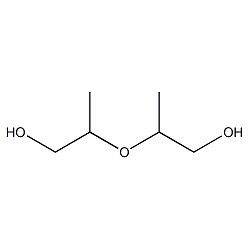
Dipropylene glycol (mixture of isomers)
ISO 17034 Reference Material
| Item number | 691778 |
| CAS | 25265-71-8 |
| Formula | C6H14O3 |
| Molecular weight | 134,17 g/mol |
| Quantity | 1x250mg |
| storage conditions | 20 °C |
| CoA / MSDS | Retrieve CoA Retrieve MSDS Show Safety Data Sheet online |
Price |
| Safety Data Sheet | according to Regulation (EC) No 1907/2006 (REACH) Classifications according to Regulation (EC) No 1272/2008. Printdate September 21, 2026 |
| IDENTIFICATION OF THE SUBSTANCE/MIXTURE AND OF THE COMPANY/UNDERTAKING | |
| Product name: | Dipropylene glycol (mixture of isomers) |
| Catalog No.: | 691778 |
| Relevant identified uses of the substance or mixture | Identified: Laboratory chemical uses: R&D |
| Uses advised against: | HPC Standards Inc 271 17th Street, NW, Suite 1750 Atlanta, GA 30363 Tel. +1 (678) 244-1536 Fax. +1 (404) 586-6820 sales@hpc-standards.us |
| Emergency telephone number | HPC Standards Tel. +1 (678) 244-1536 This number is only available during office hours. |
| HAZARDS IDENTIFICATION | 2.1 Classification of the substance or mixture Not a hazardous substance or mixture according to Regulation (EC) No. 1272/2008. |
| Label elements | |
| Pictogram | |
| 2.2 Label elements Not a hazardous substance or mixture according to Regulation (EC) No. 1272/2008. 2.3 Other hazards This substance/mixture contains no components considered to be either persistent, bioaccumulative and toxic (PBT), or very persistent and very bioaccumulative (vPvB) at levels of 0.1% or higher. | |
| COMPOSITION/INFORMATION ON INGREDIENTS | 3.1 Substances Formula : C6H14O3 Molecular weight : 134,17 g/mol CAS-No. : 25265-71-8 EC-No. : 246-770-3 |
| Formula | C6H14O3 |
| Molecular Weight (g/mol) | 134.17 |
| CAS-No. | 25265-71-8 |
| FIRST AID MEASURES | 4.1 Description of first aid measures If inhaled If breathed in, move person into fresh air. If not breathing, give artificial respiration. In case of skin contact Wash off with soap and plenty of water. In case of eye contact Flush eyes with water as a precaution. If swallowed Never give anything by mouth to an unconscious person. Rinse mouth with water. 4.2 Most important symptoms and effects, both acute and delayed The most important known symptoms and effects are described in the labelling (see section 2.2) and/or in section 11 4.3 Indication of any immediate medical attention and special treatment needed No data available |
| FIRE-FIGHTING MEASURES | 5.1 Extinguishing media Suitable extinguishing media Use water spray, alcohol-resistant foam, dry chemical or carbon dioxide. 5.2 Special hazards arising from the substance or mixture Carbon oxides 5.3 Advice for firefighters Wear self-contained breathing apparatus for firefighting if necessary. 5.4 Further information No data available |
| ACCIDENTAL RELEASE MEASURES | 6.1 Personal precautions, protective equipment and emergency procedures Avoid breathing vapours, mist or gas. For personal protection see section 8. 6.2 Environmental precautions Do not let product enter drains 6.3 Methods and materials for containment and cleaning up Keep in suitable, closed containers for disposal. 6.4 Reference to other sections For disposal see section 13. |
| HANDLING AND STORAGE | 7.1 Precautions for safe handling For precautions see section 2.2. 7.2 Conditions for safe storage, including any incompatibilities Store in cool place. Keep container tightly closed in a dry and well-ventilated place. Hygroscopic. Store under inert gas. 7.3 Specific end use(s) Apart from the uses mentioned in section 1.2 no other specific uses are stipulated |
| EXPOSURE CONTROLS/PERSONAL PROTECTION | |
| PHYSICAL AND CHEMICAL PROPERTIES | 9.1 Information on basic physical and chemical properties a) Appearance Form: viscous Colour: colourless b) Odour odourless c) Odour Threshold No data available d) pH No data available e) Melting point/freezing point Melting point/range: < -20 °C at 101,3 hPa f) Initial boiling point and boiling range 227 °C at 0,98 hPa g) Flash point 130 °C - closed cup h) Evaporation rate No data available i) Flammability (solid, gas) No data available j) Upper/lower flammability or explosive limits No data available k) Vapour pressure 0,0 hPa at 25 °C l) Vapour density 5,37 m) Relative density 1,023 g/mL at 25 °C n) Water solubility soluble o) Partition coefficient: n-octanol/water log Pow: -0,46 at 21,7 °C p) Auto-ignition temperature 332 °C at 98,96 - 100,18 hPa q) Decomposition temperature No data available r) Viscosity No data available s) Explosive properties No data available t) Oxidizing properties No data available 9.2 Other safety information Surface tension 71,4 mN/m at 1,01 at 22 °C Relative vapour density 5,37 |
| STABILITY AND REACTIVITY | 10.1 Reactivity No data available 10.2 Chemical stability Stable under recommended storage conditions 10.3 Possibility of hazardous reactions No data available 10.4 Conditions to avoid No data available 10.5 Incompatible materials Strong oxidizing agents 10.6 Hazardous decomposition products Hazardous decomposition products formed under fire conditions. - Carbon oxides Other decomposition products - No data available In the event of fire: see section 5 |
| TOXICOLOGICAL INFORMATION | 11.1 Information on toxicological effects Acute toxicity LD50 Oral - Rat - male and female - > 5.000 mg/kg LC50 Inhalation - Rat - male and female - 4 h - > 2,34 mg/l LD50 Dermal - Rabbit - > 5.010 mg/kg Skin corrosion/irritation Skin - Rabbit Result: No skin irritation Serious eye damage/eye irritation Eyes - Rabbit Result: No eye irritation Respiratory or skin sensitisation Buehler Test - Guinea pig Did not cause sensitisation on laboratory animals. Germ cell mutagenicity in vitro assay lymphocyte Result: negative Mutagenicity (micronucleus test) Rat - male Carcinogenicity IARC: No component of this product present at levels greater than or equal to 0.1% is identified as probable, possible or confirmed human carcinogen by IARC. Reproductive toxicity No data available Specific target organ toxicity - single exposure No data available Specific target organ toxicity - repeated exposure No data available Aspiration hazard No data available Additional Information Repeated dose toxicity - Rat - male - Oral - No observed adverse effect level - 470 mg/kg Repeated dose toxicity - Rat - female - Oral - No observed adverse effect level - 530 mg/kg RTECS: UB8765000 prolonged or repeated exposure can cause:, Central nervous system depression, Nausea, Headache, Vomiting |
| ECOLOGICAL INFORMATION | 12.1 Toxicity Toxicity to fish LC50 - Carassius auratus (goldfish) - > 5.000 mg/l - 24 h Toxicity to daphnia and other aquatic invertebrates static test EC50 - Daphnia magna (Water flea) - > 100 mg/l - 48 h (OECD Test Guideline 202) Toxicity to algae EC50 - Desmodesmus subspicatus (green algae) - > 100 mg/l - 72 h (OECD Test Guideline 201) 12.2 Persistence and degradability Biodegradability aerobic - Exposure time 28 d Result: 84,4 % - Readily biodegradable. (OECD Test Guideline 301F) 12.3 Bioaccumulative potential Bioaccumulation Cyprinus carpio (Carp) - 3 mg/l(Oxydipropanol) Bioconcentration factor (BCF): 0,3 - 4,6 (OECD Test Guideline 305C) 12.4 Mobility in soil No data available 12.5 Results of PBT and vPvB assessment This substance/mixture contains no components considered to be either persistent, bioaccumulative and toxic (PBT), or very persistent and very bioaccumulative (vPvB) at levels of 0.1% or higher. 12.6 Other adverse effects No data available |
| DISPOSAL CONSIDERATIONS | 13.1 Waste treatment methods Product Offer surplus and non-recyclable solutions to a licensed disposal company. Contaminated packaging Dispose of as unused product |
| TRANSPORT INFORMATION | 14.1 UN number ADR/RID: - IMDG: - IATA: - 14.2 UN proper shipping name ADR/RID: Not dangerous goods IMDG: Not dangerous goods IATA: Not dangerous goods 14.3 Transport hazard class(es) ADR/RID: - IMDG: - IATA: - 14.4 Packaging group ADR/RID: - IMDG: - IATA: - 14.5 Environmental hazards ADR/RID: no IMDG Marine pollutant: no IATA: no 14.6 Special precautions for user No data available |
| REGULATORY INFORMATION | 15.1 Safety, health and environmental regulations/legislation specific for the substance or mixture This safety datasheet complies with the requirements of Regulation (EC) No. 1907/2006. International Chemical Weapons Convention (CWC) Schedules of Toxic Chemicals and Precursors : Neither banned nor restricted REACH - Restrictions on the manufacture, placing on the market and use of certain dangerous substances, preparations and articles (Annex XVII) : Neither banned nor restricted Regulation (EC) No 649/2012 of the European Parliament and the Council concerning the export and import of dangerous chemicals : Neither banned nor restricted REACH - Candidate List of Substances of Very High Concern for Authorisation (Article 59). : This product does not contain substances of very high concern (Regulation (EC) No 1907/2006 (REACH), Article 57). This product contains a substance listed on Annex XIV of the REACH Regulation (EC) Nr. 1907/2006. Listed substance / Sunset Date: After the sunset date the use of this substance requires either an authorization or can only be used for exempted uses, e.g. use in scientific research and development which includes routine analytics or use as intermediate. Regulation (EC) No 1005/2009 on substances that deplete the ozone layer : Neither banned nor restricted Regulation (EC) No 850/2004 on persistent organic pollutants : Neither banned nor restricted 15.2 Chemical safety assessment For this product a chemical safety assessment was not carried out |
| OTHER INFORMATION | The above information is believed to be correct but does not purport to be all inclusive and shall be used only as a guide. The information in this document is based on the present state of our knowledge and is applicable to the product with regard to appropriate safety precautions. It does not represent any guarantee of the properties of the product. For lab use only! |