


Hotline:
+1 (678) 244-1536
sales@hpc-standards.us
271 17th Street, NW, Suite 1750
Atlanta, GA 30363

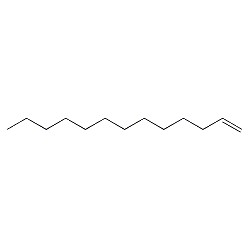
1-Tridecene
ISO 17034 Reference Material
| Item number | 682298 |
| CAS | 2437-56-1 |
| Formula | C13H26 |
| Molecular weight | 182,35 g/mol |
| Quantity | 1x1000mg |
| storage conditions | 20 °C |
| CoA / MSDS | Retrieve CoA Retrieve MSDS Show Safety Data Sheet online |
Price |
| Safety Data Sheet | according to Regulation (EC) No 1907/2006 (REACH) Classifications according to Regulation (EC) No 1272/2008. Printdate October 6, 2026 |
| IDENTIFICATION OF THE SUBSTANCE/MIXTURE AND OF THE COMPANY/UNDERTAKING | |
| Product name: | 1-Tridecene |
| Catalog No.: | 682298 |
| Relevant identified uses of the substance or mixture | Identified: Laboratory chemical uses: R&D |
| Uses advised against: | HPC Standards Inc 271 17th Street, NW, Suite 1750 Atlanta, GA 30363 Tel. +1 (678) 244-1536 Fax. +1 (404) 586-6820 sales@hpc-standards.us |
| Emergency telephone number | HPC Standards Tel. +1 (678) 244-1536 This number is only available during office hours. |
| HAZARDS IDENTIFICATION | Classification according to Regulation (EC) No 1272/2008 Aspiration hazard (Category 1), H304 For the full text of the H-Statements mentioned in this Section, see Section 16. |
| Label elements | |
| Pictogram | GHS08 silhouete silhouete |
| Label elements Labelling according Regulation (EC) No 1272/2008 Pictogram Signal word Danger Hazard statement(s) H304 May be fatal if swallowed and enters airways. Precautionary statement(s) P301 + P310 IF SWALLOWED: Immediately call a POISON CENTER/ doctor. P331 Do NOT induce vomiting. P405 Store locked up. P501 Dispose of contents/ container to an approved waste disposal plant. Supplemental Hazard information (EU) EUH066 Repeated exposure may cause skin dryness or cracking. 2.3 Other hazards This substance/mixture contains no components considered to be either persistent, bioaccumulative and toxic (PBT), or very persistent and very bioaccumulative (vPvB) at levels of 0.1% or higher. | |
| COMPOSITION/INFORMATION ON INGREDIENTS | 3.1 Substances Formula : C13H26 Molecular weight : 182,35 g/mol CAS-No. : 2437-56-1 EC-No. : 219-443-8 Component Tridec-1-ene Classification Asp. Tox. 1; H304 Concentration <= 100 % For the full text of the H-Statements mentioned in this Section, see Section 16. |
| Formula | C13H26 |
| Molecular Weight (g/mol) | 182.35 |
| CAS-No. | 2437-56-1 |
| FIRST AID MEASURES | 4.1 Description of first-aid measures General advice Show this material safety data sheet to the doctor in attendance. If inhaled After inhalation: fresh air. In case of skin contact In case of skin contact: Take off immediately all contaminated clothing. Rinse skin with water/ shower. In case of eye contact After eye contact: rinse out with plenty of water. Remove contact lenses. If swallowed After swallowing: caution if victim vomits. Risk of aspiration! Keep airways free. Pulmonary failure possible after aspiration of vomit. Call a physician immediately. 4.2 Most important symptoms and effects, both acute and delayed The most important known symptoms and effects are described in the labelling (see section 2.2) and/or in section 11 4.3 Indication of any immediate medical attention and special treatment needed No data available |
| FIRE-FIGHTING MEASURES | 5.1 Extinguishing media Suitable extinguishing media Carbon dioxide (CO2) Foam Dry powder Unsuitable extinguishing media For this substance/mixture no limitations of extinguishing agents are given. 5.2 Special hazards arising from the substance or mixture Carbon oxides Vapors are heavier than air and may spread along floors. Forms explosive mixtures with air on intense heating. Combustible. 5.3 Advice for firefighters In the event of fire, wear self-contained breathing apparatus. 5.4 Further information Remove container from danger zone and cool with water. Prevent fire extinguishing water from contaminating surface water or the ground water system. |
| ACCIDENTAL RELEASE MEASURES | 6.1 Personal precautions, protective equipment and emergency procedures Advice for non-emergency personnel: Do not breathe vapors, aerosols. Avoid substance contact. Ensure adequate ventilation. Keep away from heat and sources of ignition. Evacuate the danger area, observe emergency procedures, consult an expert. For personal protection see section 8. 6.2 Environmental precautions Do not let product enter drains. 6.3 Methods and materials for containment and cleaning up Cover drains. Collect, bind, and pump off spills. Observe possible material restrictions (see sections 7 and 10). Take up carefully with liquid-absorbent material (e.g. Chemizorb®). Dispose of properly. Clean up affected area. 6.4 Reference to other sections For disposal see section 13. |
| HANDLING AND STORAGE | 7.1 Precautions for safe handling Keep away from open flames, hot surfaces and sources of ignition.Take precautionary measures against static discharge. For precautions see section 2.2. 7.2 Conditions for safe storage, including any incompatibilities Tightly closed. Keep locked up or in an area accessible only to qualified or authorized persons. 7.3 Specific end use(s) Apart from the uses mentioned in section 1.2 no other specific uses are stipulated |
| EXPOSURE CONTROLS/PERSONAL PROTECTION | 8.1 Control parameters Ingredients with workplace control parameters 8.2 Exposure controls Appropriate engineering controls Change contaminated clothing. Preventive skin protection recommended. Wash hands after working with substance. Personal protective equipment Eye/face protection Use equipment for eye protection tested and approved under appropriate government standards such as NIOSH (US) or EN 166(EU). Safety glasses Skin protection Full contact Material: Nitrile rubber Minimum layer thickness: 0,4 mm Break through time: 480 min Material tested:Camatril® (KCL 730 / Aldrich Z677442, Size M) Splash contact Material: Nitrile rubber Minimum layer thickness: 0,4 mm Break through time: 480 min Material tested:Camatril® (KCL 730 / Aldrich Z677442, Size M) Body Protection protective clothing Respiratory protection required when vapours/aerosols are generated. Our recommendations on filtering respiratory protection are based on the following standards: DIN EN 143, DIN 14387 and other accompanying standards relating to the used respiratory protection system. Control of environmental exposure Do not let product enter drains. |
| PHYSICAL AND CHEMICAL PROPERTIES | 9.1 Information on basic physical and chemical properties a) Appearance Form: liquid b) Odor No data available c) Odor Threshold No data available d) pH No data available e) Melting Melting point/range: -23 °C - lit. point/freezing point f) Initial boiling point and boiling range 232 - 233 °C - lit. g) Flash point 79 °C h) Evaporation rate No data available i) Flammability (solid, gas) No data available j) Upper/lower flammability or explosive limits No data available k) Vapor pressure 11 hPa at 100 °C l) Vapor density No data available m) Relative density 0,766 g/cm3 at 25 °C n) Water solubility insoluble o) Partition coefficient: n-octanol/water log Pow: 6,59 - A remarkable bioaccumulation potential is expected (log Po/w >3)., (Lit.) p) Autoignition temperature No data available q) Decomposition temperature No data available r) Viscosity No data available s) Explosive properties No data available t) Oxidizing properties No data available 9.2 Other safety information No data available |
| STABILITY AND REACTIVITY | 10.1 Reactivity Forms explosive mixtures with air on intense heating. A range from approx. 15 Kelvin below the flash point is to be rated as critical. 10.2 Chemical stability The product is chemically stable under standard ambient conditions (room temperature) . 10.3 Possibility of hazardous reactions No data available 10.4 Conditions to avoid Strong heating. 10.5 Incompatible materials No data available 10.6 Hazardous decomposition products Hazardous decomposition products formed under fire conditions. - Carbon oxides Other decomposition products - No data available In the event of fire: see section 5 |
| TOXICOLOGICAL INFORMATION | 11.1 Information on toxicological effects Acute toxicity LD50 Oral - Mouse - 10.000 mg/kg Remarks: (RTECS) Skin corrosion/irritation Skin - Rabbit Result: slight irritation - 4 h (OECD Test Guideline 404) Remarks: The value is given in analogy to the following substances: Serious eye damage/eye irritation Eyes - Rabbit Result: No eye irritation - 72 h (OECD Test Guideline 405) Remarks: The value is given in analogy to the following substances: Respiratory or skin sensitization Germ cell mutagenicity Ames test Salmonella typhimurium Result: negative (Lit.) Carcinogenicity IARC: No ingredient of this product present at levels greater than or equal to 0.1% is identified as probable, possible or confirmed human carcinogen by IARC. Reproductive toxicity Specific target organ toxicity - single exposure Specific target organ toxicity - repeated exposure Aspiration hazard Aspiration hazard, Aspiration may cause pulmonary edema and pneumonitis. Additional Information RTECS: YD4595000 To the best of our knowledge, the chemical, physical, and toxicological properties have not been thoroughly investigated. Other dangerous properties can not be excluded. Handle in accordance with good industrial hygiene and safety practice. |
| ECOLOGICAL INFORMATION | 12.1 Toxicity 12.2 Persistence and degradability 12.3 Bioaccumulative potential 12.4 Mobility in soil 12.5 Results of PBT and vPvB assessment This substance/mixture contains no components considered to be either persistent, bioaccumulative and toxic (PBT), or very persistent and very bioaccumulative (vPvB) at levels of 0.1% or higher. 12.6 Other adverse effects |
| DISPOSAL CONSIDERATIONS | 13.1 Waste treatment methods Product See www.retrologistik.com for processes regarding the return of chemicals and containers, or contact us there if you have further questions |
| TRANSPORT INFORMATION | 14.1 UN number ADR/RID: - IMDG: - IATA: - 14.2 UN proper shipping name ADR/RID: Not dangerous goods IMDG: Not dangerous goods IATA: Not dangerous goods 14.3 Transport hazard class(es) ADR/RID: - IMDG: - IATA: - 14.4 Packaging group ADR/RID: - IMDG: - IATA: - 14.5 Environmental hazards ADR/RID: no IMDG Marine pollutant: no IATA: no 14.6 Special precautions for user No data available |
| REGULATORY INFORMATION | 15.1 Safety, health and environmental regulations/legislation specific for the substance or mixture This material safety data sheet complies with the requirements of Regulation (EC) No. 1907/2006. REACH - Restrictions on the manufacture, placing on the market and use of certain dangerous substances, preparations and articles (Annex XVII) Other regulations Take note of Dir 94/33/EC on the protection of young people at work. 15.2 Chemical Safety Assessment For this product a chemical safety assessment was not carried out |
| OTHER INFORMATION | The above information is believed to be correct but does not purport to be all inclusive and shall be used only as a guide. The information in this document is based on the present state of our knowledge and is applicable to the product with regard to appropriate safety precautions. It does not represent any guarantee of the properties of the product. For lab use only! |